

A General Weight Training Program for Baseball. Comprehensive training programs for individual sports are often .
Several weeks break from serious strength training is usually worthwhile. As pre- season approaches, more regular gym work can resume. Sport- specific Training and Role- specific Training. Within a generic training program for a sport, further specialty sub- programs and cycles may be useful, especially in teams where members have specific roles and certain advantageous physical attributes apply. For example, a football quarterback and a defensive lineman will probably have a different program in the gym, one emphasizing speed and agility and the other bulk, strength, and power. A pitcher is likely to do different gym work than a designated hitter or a catcher.
Arm is Everything. In baseball, your arm is everything, no matter what position you play. Training must be designed to strengthen and protect the throwing arm and shoulder at the same time. A ball player with an injured arm is not useful to anyone, no matter how big and strong his biceps or shoulders are. Even if you are a budding young pitcher, taking good care of your arm with graded training and playing is an essential strategy for longevity.
CCSU Strength and Conditioning Programs. Baseball; Facebook; Twitter. Strength & Conditioning; SAAC; Ticket Office; Toolbar. The off-season is the best time of year for baseball players to focus on their strength and conditioning. Before beginning any program, you should mak. Baseball Strength and Conditioning Program. STRENGTH, POWER, SPEED, CONFIDENCE. As the #1 Sports Performance Training in the South Texas, Jeff Paluseo and Sports.
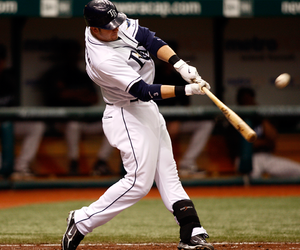
A pitcher's strength training program may differ from that of a catcher. A catcher could place more emphasis on low squatting exercises for example, whereas a pitcher would emphasize arm endurance, power and single leg balance and torso rotation. Pitchers need to work on strengthening the shoulder rotator cuff muscles to ensure freedom from painful and debilitating impingement injuries that can be long- lasting. Hitters rely on bulk, strength and power - - and a good eye - - to propel that ball over the fence. Sammy Sosa, Barry Bonds, and Mark Mc. Gwire are good examples, notwithstanding the controversies over possible supplement and steroid use.
What is the best workout program for baseball players? The baseball season is quickly approaching so we have some great workouts & programs specifically. Join Our New In-Season Baseball Training Program. Are his strength levels staying consistent? Is he picking up nagging bumps, bruises, or injuries? Design a training program that emphasizes the physical needs of a particular sport or position with these soccer and football weight lifting programs.
Yet they still need to be agile in the field, designated hitters aside. The best programs are always specific to an individual's current fitness, role in the team, access to resources, and, no less important, the team coaches' essential philosophy. You will be best served by using the following program in conjunction with a trainer or coach.
If you're new to weight training, brush up on principles and practices with the beginner resources. Always warm up and cool down before and after a training session. A medical clearance for exercise is always a good idea at the start of the season.
Phase 1 - Early Preseason. How this phase is approached will depend on whether a player is new to weight training or is coming off a season of weights. Building foundation strength means utilizing a program that works all the major muscle groups of the body.
Less- experienced weight trainers will need to start with lighter weights and work up to heavier weights. Repetitive sports activities can strengthen one side of the body at the expense of the other, or emphasize one or two major muscle groups with similar effect. Inevitably, weak areas can be susceptible to injury and can perform poorly. This is not to say that your non- throwing arm has to be as good as your throwing arm, but it does mean that you need to allocate sufficient training resources so that you achieve functional foundation strength in all areas, including opposing muscles and left and right sides of all major muscle group areas including back, buttocks, legs, arms, shoulders, chest and abdominals. In the early preseason, the foundation program encompasses a mix of endurance, strength and hypertrophy objectives, which means that the weights are not too heavy and the sets and repetitions are in the range 2 to 4 sets of 1.
In this phase, you build some strength, and some muscle size and endurance. In pre- season, you should also start doing specific rotator cuff strengthening exercises. The rotator cuff is a complex of muscles, ligaments, and tendons that control. If you're unsure, start with a light weight and increase it as you get stronger within the training period so that the perceived effort remains similar. Don't lift too heavy in this phase.
The last few reps in a set should be taxing yet without extreme effort to . You want the arm and shoulder prepared for work but not overtaxed. The rotator cuff strengthening exercises are deliberately lighter. Do front squats or dumbbell or sled hack squats if the rotation required to position a barbell on the shoulders for the traditional back squat stresses the shoulder joint to the point of discomfort. Shoulder joint protection is important at this and subsequent stages.
This message will be repeated throughout this program. Circuit training, running training and plyometrics such as bounds and jumps can be added to this gym program as well, resources and time permitting. Stop immediately if acute pain is noticed during or after an exercise, and seek medical and training advice if it persists. Phase 2 - Mid- Preseason. Strength and Hypertrophy Phase. In this phase, you will build strength and muscle. You have a good foundation from early pre- season workouts, and now the emphasis is on lifting heavier weights in order to train the nervous system in conjunction with the muscle fibers to move bigger loads.
Hypertrophy, which is building muscle size, does not necessarily imply strength, although in the foundation phase and in this phase hypertrophy will serve you well for strength development. Strength will be the foundation for the next phase, which is power development. Power is the ability to move the heaviest loads in the shortest time.
Power is essentially a product of strength and speed. Time of year: Mid pre- season.
Duration: 6 weeks. Days per week: 2- 3, with at least one day between sessions. Reps: 4- 6. Sets: 3- 5. Rest in between sets: 2- 3 minutes. Phase 2 Exercises. Barbell squat or sled hack squat. Incline dumbbell bench press.
Romanian deadlift. Lat pulldown to front with wide grip. Pull ups - 3x. 6 - add weights if you find this too easy, or just go to . Keep the forearms in a vertical plane with the upper arms not extending excessively below parallel.
If you are unable to recover from a session with only one rest day in between, re- schedule this program to two sessions each week rather than three. Strength training can be very physically and mentally demanding. You will be sore in the muscles after these sessions. Muscle soreness or delayed onset muscle soreness (DOMS) is normal; joint pain is not. Be sure to monitor your arm and shoulder reactions to this phase. Back off when any joint pain or discomfort is felt.
Phase 3 - Late Preseason. In this phase, you build on the strength developed in phase 2 with training that will increase your ability to move a load at high velocity.
Power combines strength and speed. Power training requires that you lift lighter weights than you did in the strength phase, yet with explosive intent. You need to rest adequately between repetitions and sets so that each movement is done as fast as possible. The number of sets can be less. There is no point to training like this when you're fatigued.
Time of year: late pre- season. Duration: 4- 6 weeks. Days per week: 2- 3. Reps: 8- 1. 0Sets: 2- 3. Rest between repetitions: 1.
Rest between sets: at least 1 minute or until recovery. Phase 3 Exercises. Barbell or dumbbell hang clean.
Cable wood chop. Cable push- pull. One arm cable raises each arm.
Medicine ball or dumbbell push press. Medicine ball standing twist with partner (6x.
Box jump march (6x. Vertical jump. Continue with rotator cuff exercises as in phase 1. Points to Note. It's important that you are relatively recovered for each repetition so that you can maximize the velocity of the movement. The weights should not be too heavy and the rest periods sufficient.
At the same time, you need to push or pull reasonably heavy loads to develop power against reasonable resistance. Lift heavier than phase 1 but lighter than phase 2. This should be approximately in the range 5. RM (maximum lift) depending on the exercise. With the marches and the medicine ball twists, do a full set at maximum then rest sufficiently before the next one. Rest briefly between each vertical jump so that you can maximize each one. Phase 4 - In- season.
Maintenance of Strength and Power. Alternate phase 2 (Strength) and phase 3 (Power) for a total of two sessions each week. Every fifth week, do no weight training at all to assist recovery. Continue with the rotator cuff exercises until the. Light gym work is fine. Use your judgment. Don't sacrifice skills training for weight work during the season.
Phase 5 - Off- season. Now it's time to rest up. You need this time for emotional and physical renewal. For several weeks you should forget about baseball and do other things. Staying fit and active with cross training or other activities is still a good idea.
By mid- November, you may want to think about some light gym work, rotator cuff exercises, and aerobic work. Wouldn't you know it - - it's nearly time to do it all again.


/https%3A%2F%2Fassets.over-blog.com%2Ft%2Fcedistic%2Fcamera.png)
/https%3A%2F%2Fassets.over-blog.com%2Ft%2Felegant_press%2Fimages%2Fthumb.jpg)